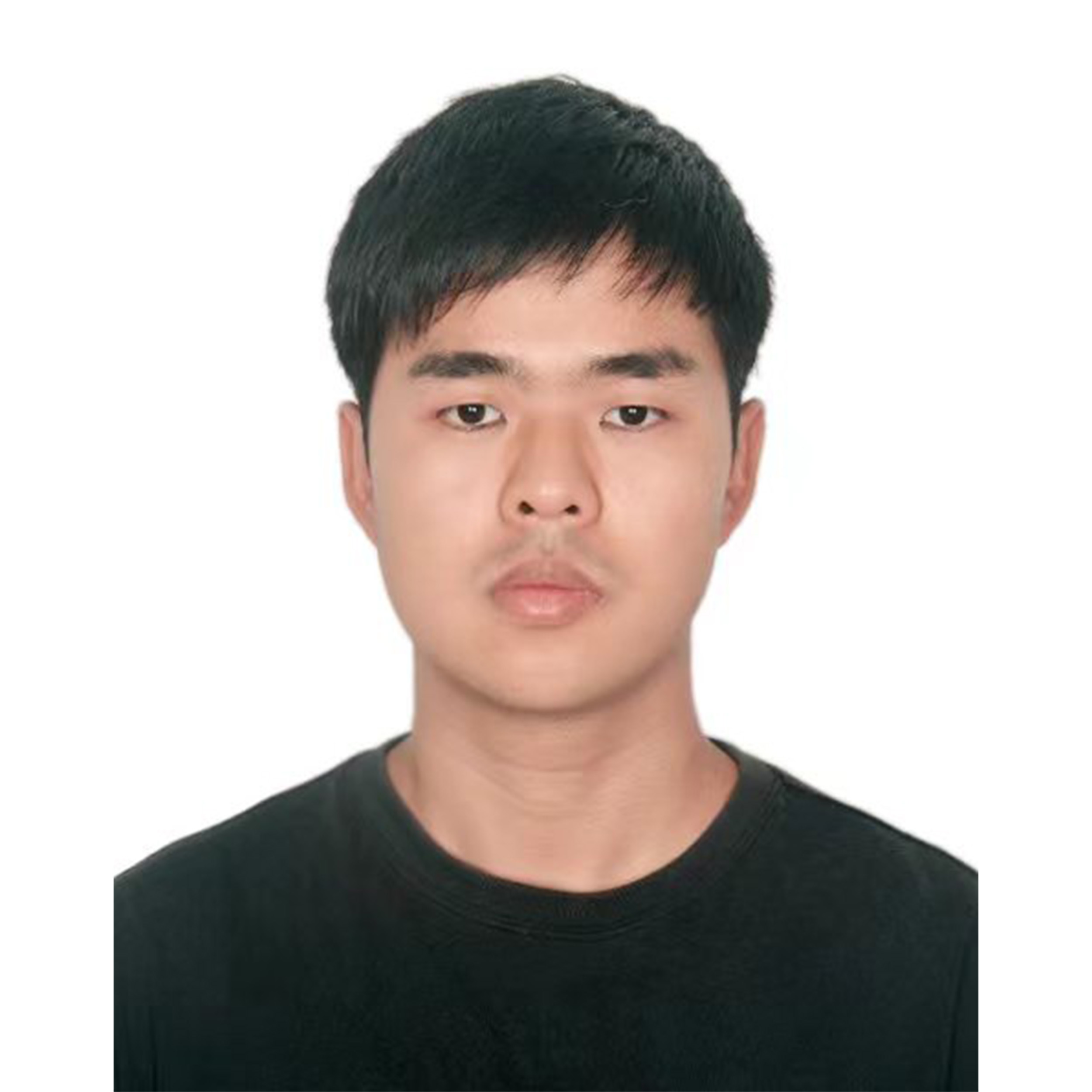
About me
I am a Ph.D. student in the School of Computing and Data Science at The University of Hong Kong, advised by Prof. Jian Qian. My research primarily focuses on reinforcement learning and generative models, with particular interests in
- GenAI and RL for Robotics: Integrating foundation models and diffusion- or flow-based generative models with reinforcement learning to enhance embodied agents.
- Theory of Offline RL and Reliable AI Systems: Developing policies that are robust to data corruption and adversarial conditions.
- RL+X: Exploring applications of reinforcement learning across diverse domains and leveraging techniques from other fields to improve RL algorithms and their performance.
Specifically, I am interested in developing practically efficient algorithms with theoretical justification for fundamental machine learning problems. I received my master’s degree from Tsinghua University in June 2025, where I was advised by Prof. Xueqian Wang (王学谦) in the Artificial Intelligence Program at Tsinghua Shenzhen International Graduate School. I also work closely with Prof. Li Shen (沈力).
News
- 2025.09: 🎉 RPEX is accepted by NeurIPS 2025
- 2024.05: AlignIQL has been preprinted on arXiv
- 2024.04: DiffCPS has been preprinted on arXiv
Publications
Reinforcement Learning
-
Robust Policy Expansion for Offline-to-Online RL under Diverse Data Corruption, NeurIPS 2025. [Code]
Longxiang He, Li Shen, Junbo Tan, Xueqian Wang.
-
AlignIQL: Policy Alignment in Implicit Q-Learning through Constrained Optimization, Preprint 2024. [Code]
Longxiang He, Li Shen, Junbo Tan, Xueqian Wang.
-
DiffCPS: Diffusion Model based Constrained Policy Search for Offline Reinforcement Learning, Preprint 2024. [Code]
Longxiang He, Li Shen, Linrui Zhang, Junbo Tan, Xueqian Wang.
-
FOSP: Fine-tuning Offline Safe Policy through World Models, ICLR 2025.
Chenyang Cao, Yucheng Xin, Silang Wu, Longxiang He, Zichen Yan, Junbo Tan, Xueqian Wang
Blogs
- 2022.10: 🎉 Transformer Attention Layer gradient The full derivation of Transformer attention gradient. We also compare the gradient we calculated with PyTorch to prove the correctness.
- 2022.08: 🎉 CNN Stochastic Gradient Descent The full derivation of CNN gradient.
Teaching
Teaching assistant at Tsinghua University
Machine Learning course instructed by Professor Xuegong Zhang (Winter 2024)